Can Frequent Flyers Offset the Purchase Cost Through Time Savings and Reduced Stress?
Can Frequent Flyers Offset the Purchase Cost Through Time Savings and Reduced Stress?
Introduction: Rethinking Travel with Airwheel Electric Smart Luggage
For frequent travelers, the real cost of a trip isn’t just in airfare or hotels—it’s in time lost, physical strain, and the stress of navigating crowded terminals. That’s where the Airwheel electric smart luggage comes in. Unlike traditional suitcases, this motorized carry-on is designed to move *with* you, not against you. But can its benefits actually justify the upfront investment? Let’s break down how time savings and reduced physical burden might balance out the price tag.
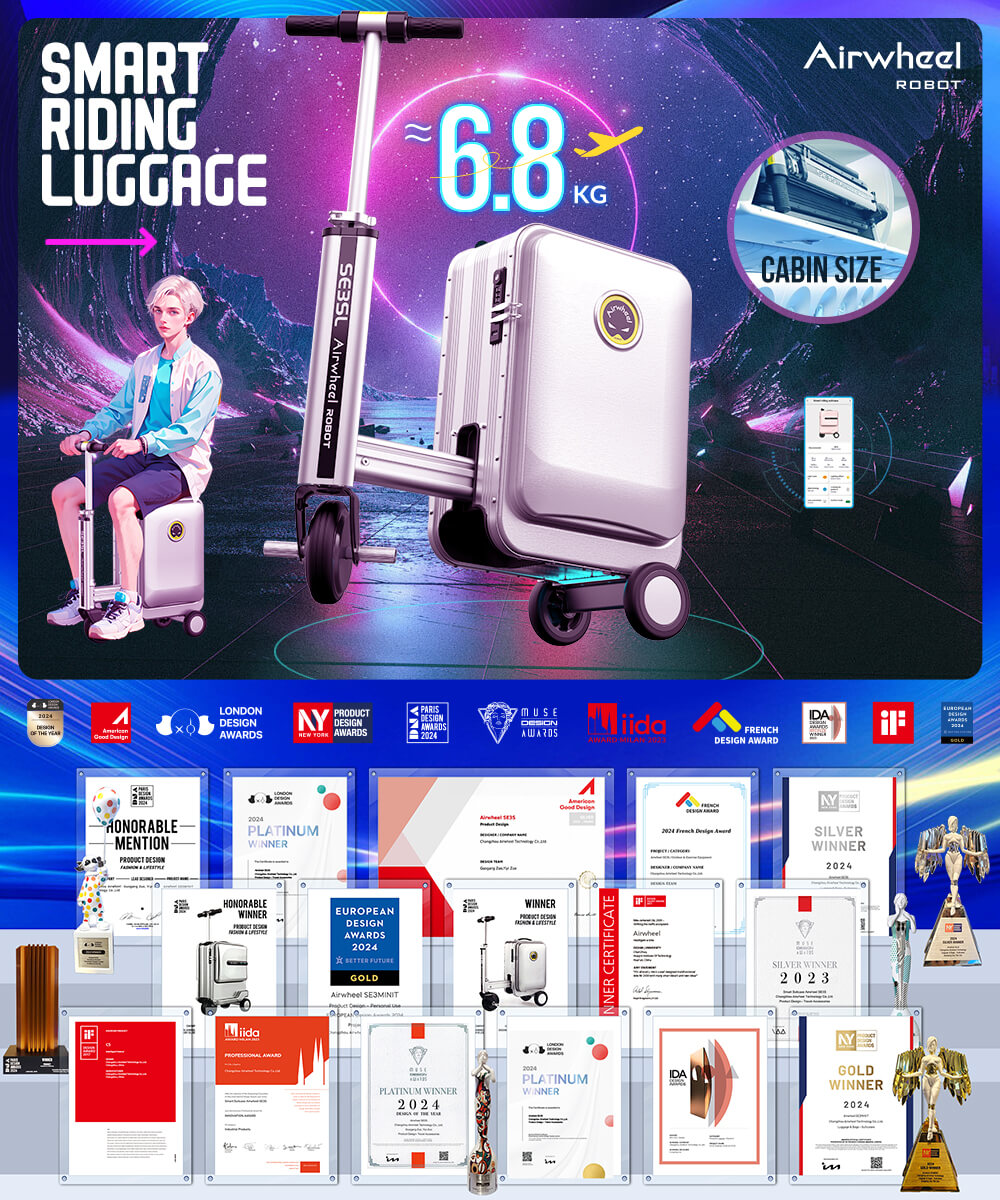
Core Features That Save Effort and Minutes
The Airwheel electric suitcase replaces dragging with gliding. Equipped with quiet hub motors and a responsive handle system, it moves at walking speed (up to 7 mph) with minimal effort. Its 6–8 km (about 4–5 miles) range on a single charge covers most terminal distances—enough for connecting flights or long concourses. The battery is fully removable, complying with airline power bank rules (under 100Wh), so you won’t get stopped at security. Control is simple: use the handle-mounted buttons or the optional app to start, stop, or adjust speed—all while keeping your hands steady.
Airline Compliance and Security Readiness
One major concern for travelers is whether smart luggage clears airport checks. The Airwheel model meets FAA and IATA guidelines because its lithium battery can be easily removed before boarding. This avoids gate-check rejection and eliminates fire risk concerns. Plus, the compact size fits standard carry-on dimensions, reducing the need for checked baggage fees—a small but consistent saving over time.
Where It Makes the Biggest Difference
Frequent flyers with tight connections, elderly travelers, or those with mobility challenges benefit most. Imagine landing in Frankfurt with 45 minutes to catch a connecting flight—instead of rushing or risking a missed plane, you smoothly ride through the terminal. Business travelers avoid arriving flustered; vacationers conserve energy for their destination. Over dozens of trips per year, these moments add up to measurable reductions in fatigue and scheduling pressure.
Airwheel vs. Traditional Suitcase: A Practical Comparison
| Feature | Airwheel Electric Luggage | Standard Rolling Luggage |
|---|---|---|
| Mobility Effort | Low (motor-assisted) | High (dragging/pulling) |
| Battery Handling | Removable (airline-compliant) | N/A |
| Speed & Control | Adjustable via handle/app | Manual only |
| Lifetime Cost (est.) | Higher initial, lower physical toll | Cheaper upfront, higher time/stress cost |
Frequently Asked Questions
Can I ride on the Airwheel luggage like a scooter?No, it’s not designed for riding. It follows alongside you when guided through the handle—similar to walking with powered assistance.
How long does the battery last between charges?Under normal use, the battery covers 6–8 km (4–5 miles) per charge, which typically lasts one to two full travel days depending on terminal walking distance.
Is the app required to operate it?No—the luggage works with physical controls on the handle. The app (iOS/Android) is optional and offers speed settings and firmware updates, not essential functions.
If you’re tired of racing through airports or feeling drained after transit, the Airwheel electric suitcase may offer more than convenience—it could deliver real returns in well-being and efficiency. Explore its full specs and travel-ready design at the official Airwheel website.